
HeatShield Chimney Sweep in Charlotte: A Homeowner’s Guide
HeatShield repairs are the quiet alternative to the full liner replacement most Charlotte homeowners get quoted. It’s a resurfacing system for clay tile flues, and when the damage is limited to cracks or worn joints, it can outlast a replacement and cost about half as much. Yet it’s rarely offered, because a sweep crew without repair capability has nothing to sell you but a broom and a referral to a mason. If you’d rather not sort this out alone, call (855) 412-0975 and we’ll give you a straight answer.
A full stainless steel liner replacement can run $3,000 – $5,000 in Charlotte. Resurfacing the same chimney with HeatShield can cost roughly half that, and for certain damage profiles the resurfaced flue is the more durable long-term repair. The catch is knowing which chimney qualifies. This guide walks through that.
Key Takeaways
- HeatShield is a resurfacing system, not a patch, and it’s applied from the top of the chimney down without excavation.
- There are two distinct products: Flue Sealant for cracks, Joint Repair for deteriorated mortar joints. They solve different problems.
- A video scan must come before any application. Skipping it means guessing.
- Older Charlotte homes with original clay tile liners are the classic candidates.
- Collapsed tiles, offset bends and active water leaks rule HeatShield out until those are fixed.
What Does HeatShield Actually Do to a Chimney?
HeatShield is a resurfacing system applied to the inside of a clay tile flue. It rebuilds the flue wall rather than inserting a new pipe into it. The work happens from the top down: a specialist pulls a tool through the chimney that presses a specialized repair material against the tile, sealing cracks and filling eroded joints as it travels. When it’s done, the flue has a smooth, continuous surface with the clearances of the original tile flue.
Why this matters in practice: a replacement liner inserts a smaller pipe into your existing chimney, which reduces the flue’s cross-section. On a chimney that’s already near the minimum size for its appliance, that reduction can affect draft. HeatShield works from the existing flue dimensions, so nothing gets squeezed down.
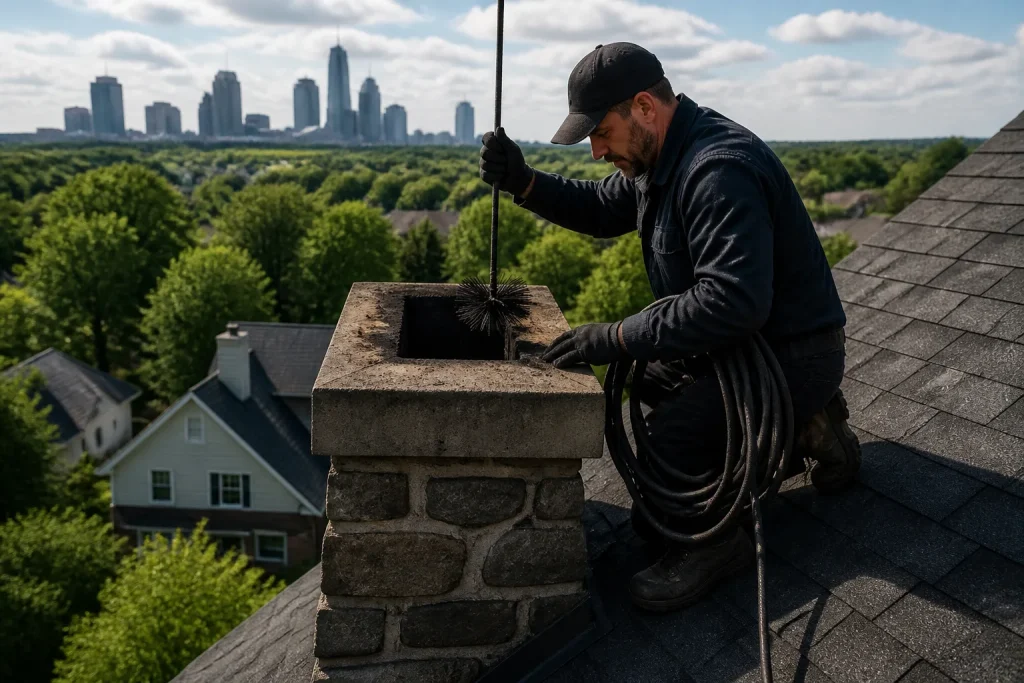
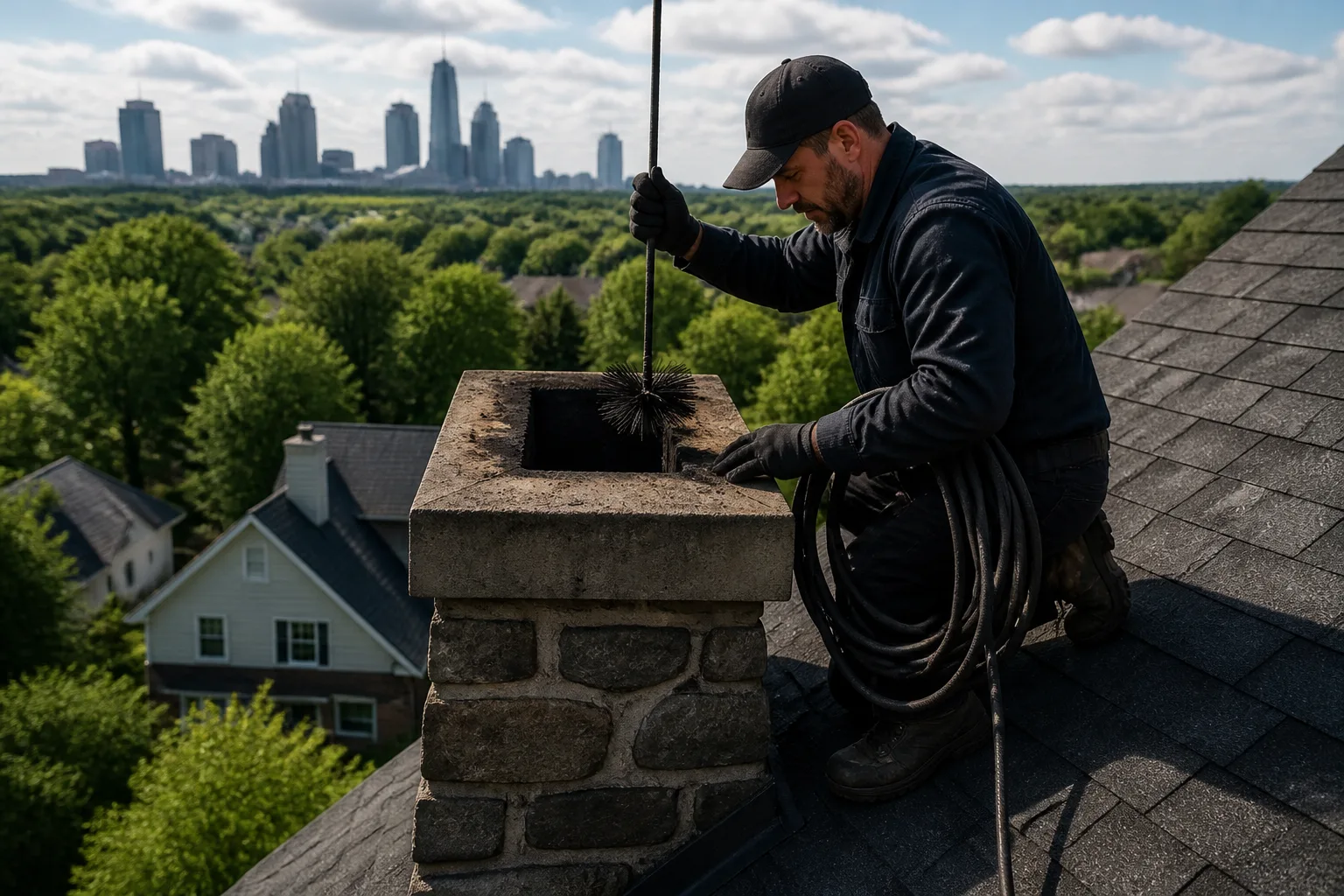
HeatShield Chimney Cleaning is a different task than a routine sweep, and it starts the same way: with a proper chimney sweep that removes soot and creosote so anyone can actually see the tile surface. In our experience, the homeowner who benefits most is the one who wants to keep the chimney they already have working properly, not the one who wants to spend money fixing a problem that isn’t there.
Cerfractory Flue Sealant and Joint Repair System: What’s the Difference?
These are two separate products for two separate failures, and confusing them is where installers get into trouble. Before any repair begins, you should know which one is going onto your chimney and why.
HeatShield Cerfractory Flue Sealant is for cracks in the tile itself. Hairline fractures running through the tile wall get filled and sealed so hot gases can’t escape through the flue wall into the chimney structure. It’s the product for a flue that’s structurally sound but weeping.
HeatShield Joint Repair System is for the horizontal mortar joints between tiles. Those joints erode over time, and gaps at the seams let combustion gases pass where they shouldn’t. The joint system rebuilds those seams.
In a lot of Charlotte chimneys, both problems show up on the same flue: cracks in one section, open joints lower down. A full application may involve both materials. A shop that only stocks one product will apply it to a chimney that needs the other, which is why the inspection matters so much. This is also why we keep repair capability in-house rather than handing you off to a separate mason.
When Is HeatShield the Right Repair for a Charlotte Chimney?
HeatShield outperforms liner replacement in three specific damage profiles. Charlotte has a large stock of homes built between the 1950s and 1980s with original clay tile liners, and a good share of those chimneys fit this list exactly.
- Hairline cracks in the tile. Small fractures with the tile otherwise intact are the textbook HeatShield case. Resurfacing seals them without removing anything.
- Deteriorated mortar joints. Eroded joints between tiles get rebuilt. As long as the tiles aren’t shifting, this is a strong repair.
- Minor spalling in sound tiles. Flaking where the tile face has started to degrade but the tile structure holds. These are usually candidates rather than replacements.
The Charlotte angle is housing age. Original clay liner installations from that era didn’t fail overnight; they’ve been aging for decades. A chimney from 1965 that’s had one owner and a light fire habit may have a flue that’s cosmetically rough and structurally fine, which is a HeatShield chimney, not a replacement chimney. Homes in neighborhoods with older stock, from established areas close to downtown out to mid-century subdivisions, are where these turn up most. A Charlotte homeowner with a mid-century house should ask specifically about resurfacing before agreeing to a liner quote.
The brands around this work matter. HeatShield itself is the system; the accessories and components around it come from brands like Olympia Chimney and DuraFlex. We keep professional-grade product lines because repair work lives or dies on material quality.
When HeatShield Is the Wrong Call
HeatShield is a great repair, not a universal one. There are clear situations where it’s not appropriate, and any company that quotes it anyway is either guessing or rushing.
- Collapsed or missing tiles. If the flue wall has failed structurally, there’s nothing sound to bond to. A new liner is the answer.
- Significant offset bends. Chimneys with a major jog in the flue can make resurfacing impractical or impossible. The equipment can’t get a proper seal through the bend.
- Active water infiltration that hasn’t been sourced. Water entering the chimney dissolves and carries material that attacks the flue. If you resurface without finding and fixing the leak first, you’ve applied a good repair over a wet chimney. The leak wins.
Notice what’s not on the list: age. An old chimney is not disqualified. A rough tile is not disqualified. The disqualifiers are structural failure, geometry, and unresolved water. That’s why the inspection has to come first. Anyone quoting a HeatShield job over the phone, before anyone has seen the flue, is selling a product, not a repair. And it’s why we look at the whole chimney, roof flashing included, before we commit to a plan.
Want to know what the chimney actually looks like inside? Call (855) 412-0975. We answer 24/7. Fast dispatch from 7am to 7pm, Sunday through Friday.
What Happens During a HeatShield Application?
The application itself is mechanical and predictable. The scan before it is where the real work happens.
- Video scan. A camera travels the full length of the flue. The technician maps every crack, joint and spall, and notes the flue dimensions and any structural issues. You see the video. Not a sales pitch about it, the actual footage.
- Cleaning. A proper sweep clears soot and creosote so the surface is clean enough for material to bond. Resurfacing a dirty flue is the same thing as painting over dust.
- Application. The tool pulls a specialized material down the flue, pressing it against the tile. Cerfractory Flue Sealant goes where there are cracks; Joint Repair goes where the seams have opened.
- Verification. A second camera pass confirms coverage. You get images of the finished flue.
If a company wants to quote HeatShield without a video scan, ask what they’re basing the recommendation on. A flashlight from the top step isn’t enough. The flue above and below the flue collar needs to be seen, and the flue collar area is where a lot of damage hides.
When to Call a Pro
If your chimney has a clay tile liner and you’ve been told it needs a full replacement, get a second opinion before you agree. Specifically ask two questions: is there a video scan on file, and is HeatShield an option here?
Call a pro rather than going up there yourself. Chasing a chimney top on a ladder to check tile condition is how homeowners end up in the emergency room. High roof work and confined flue spaces are not DIY territory. A trained technician with the right equipment sees more from one camera pass than you’ll manage in an afternoon with a flashlight, and nobody gets hurt.
Call when you see any of these:
- Tiles that shift when the flue is brushed, or crumbles in the cleanout.
- Staining on the chimney exterior or ceiling below.
- A steel liner quote with no scan behind it.
- A smell of creosote or an odor that gets worse in humid weather. Charlotte’s summer humidity makes flue and dryer vent issues more noticeable, which is often the first thing a homeowner notices.
Related services in Charlotte: our dryer vent cleaning covers the other half of the fire hazard equation. Fabric and Famco-compatible components go into a proper dryer vent installation, and a clear vent is a burn-risk reduction every bit as real as a clean flue. One call covers both.
Is HeatShield Cheaper Than Liner Replacement?
Usually, yes. Here’s the honest comparison. These are typical estimates for the Charlotte market; the written estimate after inspection sets the final price.
| Option | Typical Estimated Cost | Best For |
|---|---|---|
| HeatShield resurfacing | Roughly half of a liner replacement | Cracked tile, worn joints, minor spalling in sound tiles |
| Full stainless liner replacement | $3,000 – $5,000 | Collapsed tile, offset bends, structural failure |
The cost advantage is real but it’s not the main reason to choose HeatShield. The main reason is that it preserves the flue’s original dimensions and works with what’s there. A liner replacement is a fine solution to the right problem. It just happens to be the wrong solution to a cracked tile.
There are situations where the liner replacement is the straighter answer, and when that’s true, we’ll say so. When it isn’t, we’ll show you why on the video from your own chimney. That’s the whole point of working with a company that repairs, not just a company that cleans.
As a full-service fire-hazard specialist, we keep the brands that certified professionals use, including Olympia Chimney, Copperfield and DuraFlex, and we resurface with HeatShield. The same crew that cleans your flue can resurface it. No second contractor.
The Bottom Line
HeatShield is a resurfacing system, and it deserves a place in the conversation when the damage is hairline cracks, worn joints or minor spalling. It’s not a patch, and it’s not a fix for a structurally failed chimney. But for the right chimney, it’s a durable repair at roughly half the cost of a full liner replacement, and most homeowners never hear about it before agreeing to a replacement.
The floor on all of this is a video scan. Don’t approve a HeatShield job, or a liner job, without one. If you’re in Charlotte and need help, Charlotte Chimney Cleaning offers free estimates. Call (855) 412-0975. We answer 24/7. Fast dispatch from 7am to 7pm, Sunday through Friday. Learn more about Charlotte Chimney Cleaning and what we cover.
Frequently Asked Questions
How much does HeatShield cost in Charlotte? It depends on flue size and damage extent, but it’s typically about half the cost of a full liner replacement, which runs $3,000 – $5,000. The estimate is free and the written estimate sets the final price. Call (855) 412-0975 for an exact quote.
Do I need a new liner, or can HeatShield fix what I have? If you have hairline cracks, worn joints or minor spalling in otherwise sound clay tiles, HeatShield is usually the stronger repair. Collapsed tiles, significant offset bends and active water intrusion rule it out. A video scan answers which situation you’re in. Call (855) 412-0975 to book one.
Can HeatShield work on old chimneys? Yes. Age is not a disqualifier. Homes built from the 1950s through the 1980s with original clay tile liners are the most common candidates. Charlotte has a lot of exactly these houses. Call (855) 412-0975 to find out if yours qualifies.
What happens if I skip the repair? Cracks and open joints let hot gases and moisture move through the flue wall. That’s a fire risk and a carbon monoxide risk, and it gets worse with time. It’s worth getting a scan on the calendar before the next burning season. Call (855) 412-0975 for a free estimate.
Written by the team at Charlotte Chimney Cleaning, serving Charlotte since 2018.
Need Chimney Cleaning Help?
Call Charlotte Chimney Cleaning - licensed & insured, with free written estimates in Charlotte.
(855) 412-0975